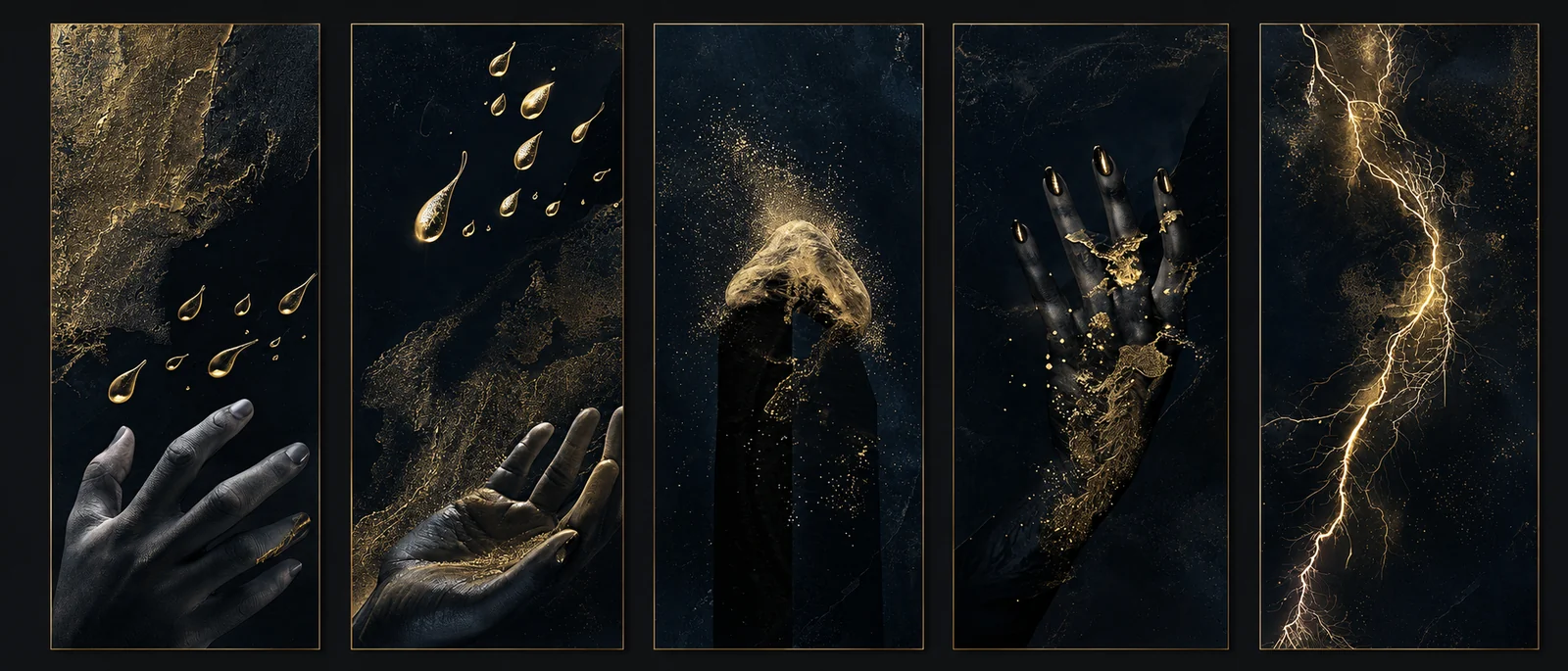
The Line I Inherited
When I was starting out, a mentor said something I never forgot. We were on a production, and I had just argued that making the stage brighter would make it more moving.
He shook his head and said:
“Contrast is the soul of stagecraft.”
At the time I only half understood him. But with every production since, the words have proven themselves the core of design. The “awe” in an experience is not an absolute value. It is a differential.
Zero Lux and a Thousand Lux
Consider lighting.
Light a stage at 1000 lux and the audience simply gets used to it. Eyes adapt. Nothing feels special.
Start from 0 lux, and everything changes. Total darkness. Nothing visible. Breath held. Then snap up to 1000 lux, and the audience gasps. The same 1000 lux becomes an entirely different experience.
The number is identical. What differs is what came before.
And this is not just about light. Volume, temperature, the scale of a space — they all obey the same law. Place a quiet sound after a loud one and the quietness cuts deeper. Step out of a narrow corridor into a wide hall and the space feels twice its size.
Why the Differential Does the Work
Designing contrast is not manipulating emotion. It is preparing it.
Our senses respond to change and grow numb to constants. So the designer's job is not to build the intense moment — it is to build what comes right before it.
Every space NYX designs has a “before” — a place that resets the audience's senses ahead of the main event. Stillness, darkness, narrowness, empty space. Only those who pass through it are truly astonished by what comes next.
Awe can be designed. But you don't design the moment of awe — you design the moment before it.
If you want 1000 lux,
make what comes before it zero.
Thirty years later, my mentor's words still hold.
— Shoichiro Tsuno · CCO, NYX